What walking on Perito Moreno Glacier in crampons feels like
Most people who walk on Perito Moreno do it on the Minitrekking, about an hour on the ice with mountain guides. The ice is firm and uneven rather than slippery once the crampons are on. This guide follows the walk from the boat to the glass of whisky at the end.
The boat across Brazo Rico
Every ice walk starts at Puerto Bajo de las Sombras, a small port inside the park. A boat takes you across Brazo Rico in about 20 to 30 minutes, heading straight toward the glacier's south wall.
Stand outside on deck if the wind lets you. The wall grows as you approach, and ice can break off into the water while you watch, though calving is possible rather than promised.
The refuge and a short talk on the shore
The boat lands near a refuge, the base for the rest of the day. A walk along the lake shore takes you toward the edge of the glacier.
Before the ice, the guides give a short talk on glaciology. Expect to hear how the glacier flows down from the Southern Patagonian Ice Field and why its front keeps advancing.
In the middle of the glacier the ice can advance a couple of meters in 24 hours. That steady push is why the front calves and why the route on top changes from one day to the next.
Fitting the crampons
Mountain guides strap the crampons onto your own shoes, so you never handle the buckles alone. On the Hielo y Aventura version of the walk, helmets go on as well.
Groups split up here, with about one guide for every 10 people. Each guide leads a small line onto the ice and sets its pace, which keeps the walk calm even on a busy day.
Your shoes matter more than you might expect. Comfortable, closed walking shoes hold the straps best, and our guide to dressing for the ice covers the rest of your kit.
How to walk in crampons
The first steps feel odd, because the spikes grip harder than any boot sole. Guides tell you a few simple habits, and most people settle in within minutes.
- Keep your feet a little wider apart than usual, so the spikes don't catch your pants
- Put the whole sole down flat with each step, rather than walking on your heels
- Go uphill with small steps and downhill with bent knees
- Stay in line behind the guide and step where they step
- Stop walking before you turn around for a photo
The ice feels firm underfoot, closer to walking on hard, crunchy snow than on a frozen pond. Uneven ground is the main challenge. Short climbs and dips come between the ridges.
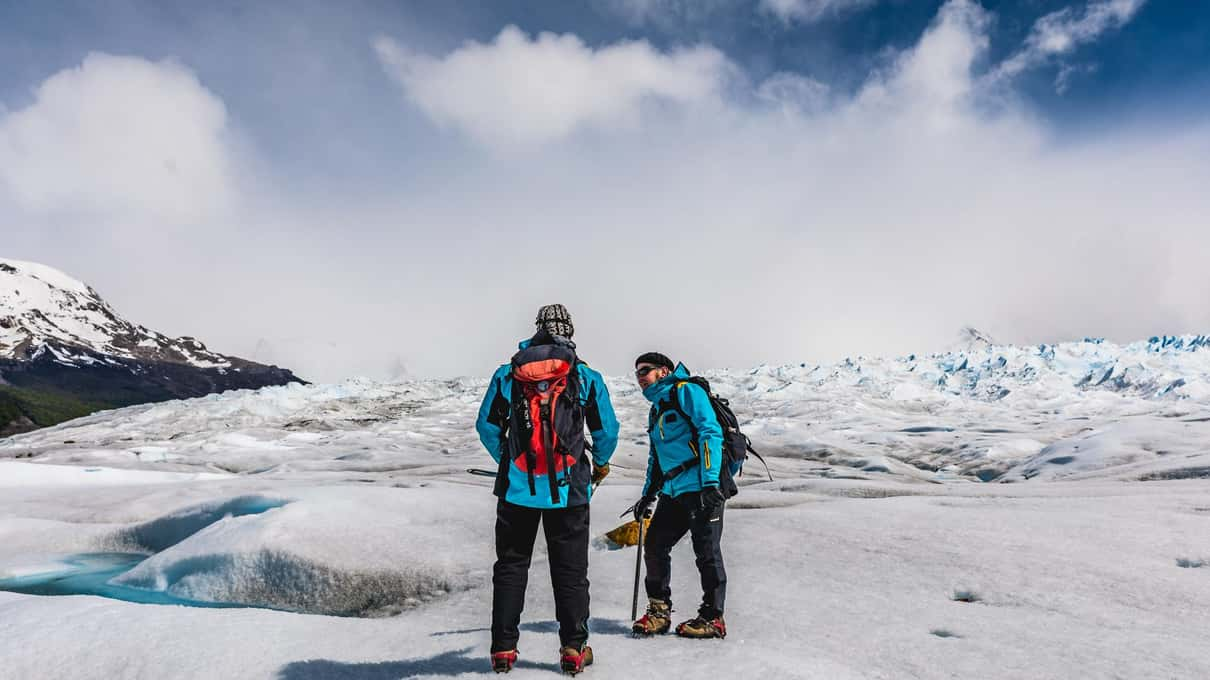
An hour in crampons with mountain guides
Patagonia Dreams' Minitrekking, the walk described on this page, with hotel transfers by option and a sail along the ice wall afterward.
What you see in an hour on the ice
The surface is a landscape of white ridges and blue cracks. You pass crevasses and seracs, the tall blocks that form where the ice breaks apart. Elsewhere, sinkholes swallow the meltwater.
Small lagoons of deep-blue water sit in hollows along the way. The color is strongest on gray days when the glare drops and the ice shows its blue.
Guides choose a new route every day as the glacier moves, which is why reviewers on different days describe different features. An hour covers enough ground to see each of these up close.
If an hour sounds short, the Howlanders hike gives about two and Big Ice about three. Our Minitrekking or Big Ice comparison sets the options side by side.
If the ice makes you nervous
Plenty of first-timers worry about falling. The guide walks in front and chooses the line around the deeper cracks, so you are never picking a path on your own.
Tell your guide before you start if heights or slopes bother you. They can place you right behind them, where the steps are easiest to copy and the pace is easiest to follow.
Slow walkers are normal in every group. The hour is not a race, and the guide sets a pace the whole line can hold.
Whisky, then back through the forest
The walk ends with a drink poured over chunks of glacier ice, usually whisky. Both listings mention it, and reviewers on the Patagonia Dreams Minitrekking remember it along with the chocolates handed around.
It is a short stop on the ice before the crampons come off. If you don't drink alcohol, ask your guide whether another drink is on offer.
The return goes through Magellanic forest, mostly lenga trees, to the refuge. There you eat the lunch you brought, since none is included on the Minitrekking.
The boat then sails along the glacier's wall on the way back to port. On Patagonia Dreams' version the day closes at the walkways facing the glacier's north and central front, with about 40 minutes to explore.
For the times of each stage, from the hotel pickup to the drive home, see our Perito Moreno trekking day plan.
Photos on the ice
Phones and cameras come along on the walk. Guides set the pace, so take pictures when the line pauses and keep a hand free for balance on the dips.
Thin gloves that work with a touchscreen save cold fingers, and a wrist strap keeps a phone out of a crevasse. Sunglasses help with the glare, which is strong even under cloud.
Rain does not stop the walk, which makes a waterproof camera pocket useful. Our guide to wet and windy days covers the rest. Who can join is in age limits and fitness.