Dressing for the ice on a Perito Moreno glacier trek
A summer day in El Calafate can feel mild in town and wintry an hour later on the glacier. The operators publish their own what-to-bring lists, and they are more practical than most packing advice. This guide turns them into eight things for the bag and explains why each one matters on the ice.
Colder by the ice than in town
Summer afternoons in El Calafate are often around 15–20 °C (59–68 °F), which feels like a light-jacket day on the main street. By the glacier the air turns cooler, and the wind coming off the ice and the lake makes it feel colder still.
The sky also changes quickly. A bright morning at the pier can turn to drizzle on the boat across Brazo Rico and back to sun on the ice, so dress for the whole range rather than for the view from your hotel window.
Our page on bad weather and suspended treks covers what bad weather does to the trip itself. This one is about the clothes and the bag.
What the operators ask you to bring
Patagonia Dreams keeps its list for the Minitrekking from ~$424 short. Bring a passport or ID and comfortable shoes along with a packed lunch and clothing suited to the weather. The listing does not allow luggage or large bags.
Hielo y Aventura's list for Big Ice from ~$459 is longer and more useful for any walk on this glacier. It reads like a hiker's checklist that runs from rain gear and gloves to hiking pants and a waterproof bag.
You do not need to bring any ice gear, since mountain guides fit crampons at the refuge. Helmets come with the Hielo y Aventura treks, and Big Ice adds a harness. The company's Mini-Trek list also rules out drones.
8 things to pack for the ice
This list combines both operators' lists into one bag for the day. It works on every ice walk here, from the Minitrekking to Big Ice.
- A waterproof shell jacket with a hood, for drizzle on the boat and wind on the ice
- Two warm layers underneath (a thin base plus a fleece), so one can come off on the climb
- Hiking pants that dry fast, with rain pants on top when the forecast looks wet
- Waterproof, warm hiking shoes that you have already broken in
- Gloves you can keep on while holding a rail or touching the ice
- A hat and sunglasses, because the glare off white ice is hard on the eyes
- Biodegradable sunscreen, which Hielo y Aventura lists and which you need even under cloud
- A small daypack holding lunch and drinks, your ID with some cash, plus a waterproof bag for the phone
Leave jeans and cotton hoodies at the hotel. Cotton soaks up drizzle and spray and then stays cold for hours. Wool and synthetic layers keep some warmth when damp.
Layers for the moraine and the ice
The day swings between standing still and climbing. You wait on the pier, sit on the boat, then walk along the lake shore and up onto the glacier. On Big Ice you first spend about 2 hours on the moraine and in the forest.
That approach warms you up fast, even on a cold day. Wear layers you can open or peel off without holding up the group, and carry the spare one inside the pack rather than tied loosely around your waist.
On the ice the pace is slow and steady. Guides stop often to explain crevasses and blue pools, and those pauses are when the wind finds you, so put the layer back on before you start to shiver.
For the terrain and the pace step by step, read what walking in crampons feels like.
The classic walk with the shortest packing list
Patagonia Dreams' Minitrekking needs little more than ID and good shoes. Bring warm layers and your own lunch. It gives about an hour on the ice and is rated 4.8 from 800+ reviews on GetYourGuide.
Good shoes and warm hands
The guides strap crampons over your own footwear, so the shoe underneath does a lot of the work. A firm waterproof hiking shoe or boot keeps your feet dry on wet ice and on muddy forest paths.
Running shoes and city sneakers are a poor match. Patagonia Dreams only asks for comfortable shoes, but the Hielo y Aventura list says waterproof and warm, and on a wet day the difference is obvious.
Gloves sound optional in summer until you are on the glacier. Your hands go on cold boat rails and crampon straps, and sometimes on the ice itself, and wet fingers chill quickly in the wind.
Big Ice reviewers call the crampons heavy over a long day, and many count 14–15 km (about 9 miles) of walking. Shoes that fit well make that weight far easier to carry.
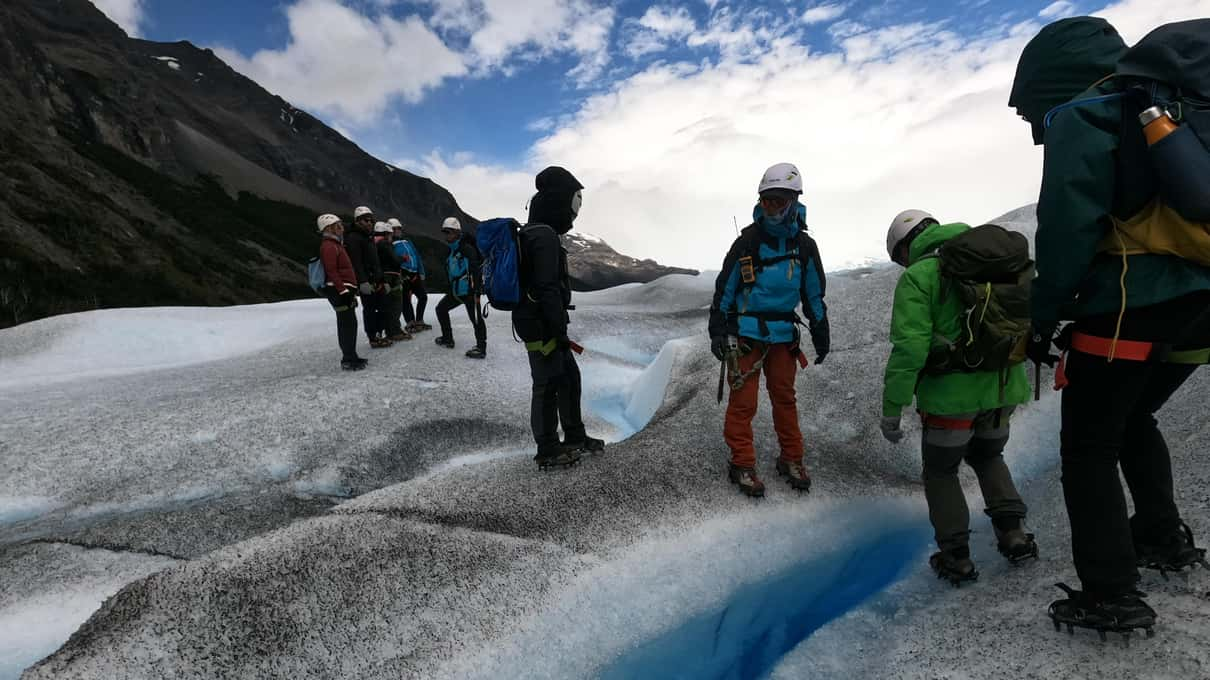
Glare and the gray-day sunburn
Ice reflects light from below as well as from above. Sunglasses protect your eyes from that glare even when the sky is overcast, and a hat with a brim helps on a bright day.
The same reflection reaches skin that rarely sees the sun, such as under the chin and nose. Hielo y Aventura asks for biodegradable sunscreen, which is kinder to the lake, so put it on before you board the boat.
Food and cash for the day
None of the three ice walks includes lunch, so pack it the night before. Big Ice reserves 30 minutes for lunch out on the glacier. Minitrekking groups eat theirs back at the refuge.
Carry some cash in Argentine pesos. The national park fee can be paid at the entrance or bought online in advance on the official national parks website, and the café at the walkways is handy on a cold afternoon.
Keep the bag small and leave suitcases at the hotel, since the day ends back in El Calafate. Our day plan from El Calafate covers pickup times and the park gate, and the price guide adds up the extras.